
Nature Science+Photography
The Scientific and Psychological Foundations of Photography
I still vividly remember the night I stumbled upon Galen Rowell’s Vision: The Art of Adventure Photography in a bookstore somewhere along Florida’s Atlantic coast. I was instantly captivated by the way he seamlessly wove together scientific insights, personal adventures, and breathtaking photographs into something that truly felt like his lived life. Naturally, Mountain Light was next on my reading list—followed by the columns he regularly wrote for a magazine. They all became a sort of bible to me and remain among my most cherished possessions to this day. I was determined to pick up this incredibly valuable thread—the one linking science and photography—to delve deeper into it, and to spin it into something of practical utility. Now, while I cannot contribute my own firsthand mountaineering tales as he did, I am driven by a need to thoroughly master a subject—to experience that "Eureka moment" when all the pieces of the puzzle suddenly fall into place, and then to set it all down in clear, concise language. All this to honor Galen Rowell’s maxim: "Luck favors the prepared mind." Only by understanding the underlying scientific principles can we evolve from merely reacting to light to consciously shaping it—thereby creating the precise conditions that transform a fleeting opportunity into a fully realized vision. And that is precisely what Nature Science+Photography is all about: creating better images through an understanding of the fundamental physiological, psychological, and technical foundations.
Nature Science+Photography is a series that benefits anyone with an interest in photography. For beginners, it establishes a solid foundation by interlinking various key photographic subject areas; advanced practitioners, meanwhile, benefit from its exploration of questions that many other guidebooks overlook.
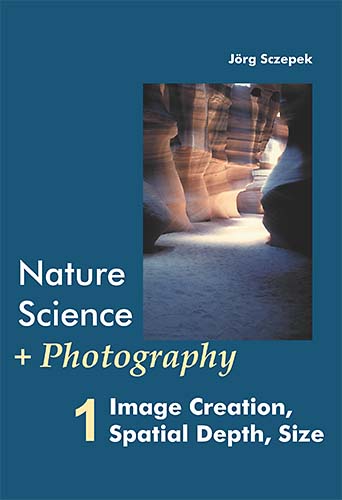
Volume 1 of the series Nature Science+Photography addresses fundamental questions regarding visual perception and the creation of photographic images.
How does our sense of sight function in the interplay between eye and brain?
How are photographic images formed?
Why do we perceive our environment in three dimensions?
What factors must we take into account to convey spatial depth in our photographs?
What governs our perception of object sizes—and their subsequent depiction?
The volume concludes with a physiologically grounded set of recommendations on what we should do in photography to capture visually compelling images.
See all details
How does our sense of sight function in the interplay between eye and brain?
How are photographic images formed?
Why do we perceive our environment in three dimensions?
What factors must we take into account to convey spatial depth in our photographs?
What governs our perception of object sizes—and their subsequent depiction?
The volume concludes with a physiologically grounded set of recommendations on what we should do in photography to capture visually compelling images.
See all details
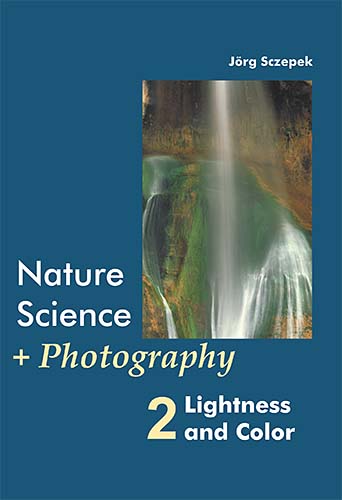
This second volume in the series Nature Science+Photography explores the visual and technical foundations of brightness and color.
How do we perceive brightness and color?
Why do we perceive our environment in color?
Does a colorful world exist independently of us?
How do we reproduce impressions of brightness and color?
Why is color management necessary, and how does it work?
How do photographic media generate brightness and color?
What insights can we glean from the workings of the visual system to inform image composition?
See all details
How do we perceive brightness and color?
Why do we perceive our environment in color?
Does a colorful world exist independently of us?
How do we reproduce impressions of brightness and color?
Why is color management necessary, and how does it work?
How do photographic media generate brightness and color?
What insights can we glean from the workings of the visual system to inform image composition?
See all details

Volume 3 is dedicated to the subject of visual sharpness.
What is visual sharpness?
Why are resolving power and edge sharpness decisive for our perception of sharpness?
On which factors does the resolving power of the visual system depend?
Which optical principles determine image sharpness?
What is depth of field, and how does it relate to the various photographic parameters?
How is the resolving power of photographic components—and of the final image—quantified?
How can we enhance the edge sharpness of our photographs?
See all details
What is visual sharpness?
Why are resolving power and edge sharpness decisive for our perception of sharpness?
On which factors does the resolving power of the visual system depend?
Which optical principles determine image sharpness?
What is depth of field, and how does it relate to the various photographic parameters?
How is the resolving power of photographic components—and of the final image—quantified?
How can we enhance the edge sharpness of our photographs?
See all details

Volume 4 of the series explores the subject of contrast.
What is contrast, and how is it determined?
Why is contrast crucial to our visual perception?
What is the contrast capacity of the visual system, and what factors does it depend on?
How many tonal values can we perceive in a photograph?
What expectations do we have regarding the contrast reproduction of a photograph?
How do we meet these expectations in analog and digital photography?
What determines the contrast capacity of our imaging media?
What is gamma correction all about?
What role does contrast play in exposure metering?
See all details
What is contrast, and how is it determined?
Why is contrast crucial to our visual perception?
What is the contrast capacity of the visual system, and what factors does it depend on?
How many tonal values can we perceive in a photograph?
What expectations do we have regarding the contrast reproduction of a photograph?
How do we meet these expectations in analog and digital photography?
What determines the contrast capacity of our imaging media?
What is gamma correction all about?
What role does contrast play in exposure metering?
See all details

Volume 5 of the series Nature Science+Photography explores light—the elemental component of photography.
What is light?
How can we describe and generate it?
What is its relationship to the Sun, our primary source of light?
What are the underlying principles behind the atmospherical light phenomena that are significant to photography?
What factors must we consider when framing the Moon as a subject, or utilizing it as a light source?
How can we capture the stars in photographs?
How can we harness astronomical conditions to work in our favor for the best possible lighting?
See all details